The 5 Most Common Symptoms of a Broken Spring
- COMMERCIAL GARAGE DOOR REPAIR
- GARAGE DOOR OPENER INSTALLATION
- GARAGE DOOR SPRING REPAIR
- SAME-DAY GARAGE DOOR REPAIR
- CUSTOM GARAGE DOOR
- GARAGE DOOR OPENER REPAIR
- GARAGE DOOR TRACK REPAIR
- GARAGE DOOR CABLE REPAIR
- GARAGE DOOR PANEL REPAIR
- LOCAL GARAGE DOOR REPAIR
- GARAGE DOOR REPLACEMENT
- NOISY GARAGE DOOR FIX
- GARAGE DOOR INSTALLATION
- GARAGE DOOR SECTION REPLACEMENT
- OVERHEAD GARAGE DOOR REPAIR
The 5 Most Common Symptoms of a Broken Spring
Your garage door relies on a complex system of tension and balance to lift hundreds of pounds with ease. When you encounter a broken spring, the entire mechanism loses its ability to counteract gravity, turning your convenient entrance into a heavy, dangerous wall of steel or wood.
Most homeowners don’t realize a spring is failing until it completely snaps, but your door usually provides several warning signs before the final break occurs. Recognizing these symptoms early can save you from being trapped in your garage or facing an expensive emergency repair bill in the middle of the night. At Garage Door Repair Bradenton, our technicians are trained to identify these early failures and restore your door’s safety before a total collapse happens.
Visual and Auditory Red Flags
Failure signs are most obvious in what you see and hear during operation. Because springs hold immense torque, their failure is rarely a quiet event.
The Infamous “Gunshot” Sound
If a torsion spring fails while you’re home, you will likely hear an explosive bang. This occurs as the steel coil snaps under hundreds of pounds of pressure, instantly releasing stored energy. Many homeowners mistake this noise for a heavy object falling or a break-in. If you hear this sound, do not use the electric opener, as you will likely burn out the gears trying to lift unbalanced weight.
Visible Gaps in the Coil
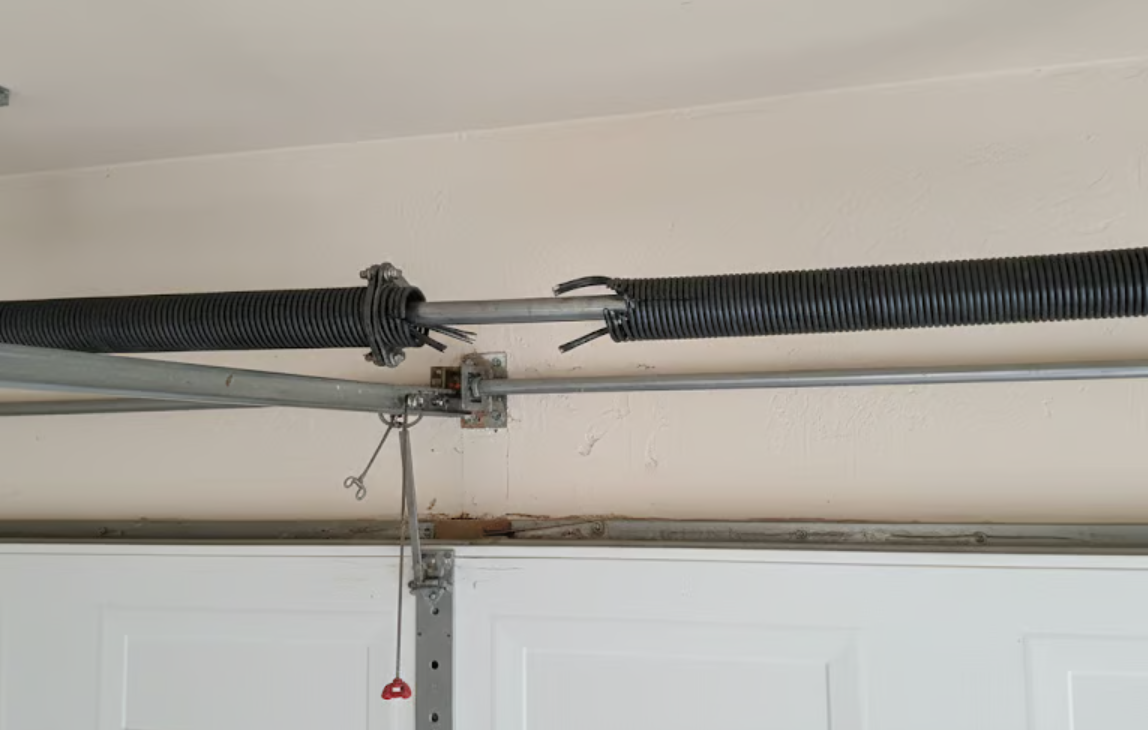
On torsion systems located above the door header, failure is easy to spot visually. A healthy spring looks like one continuous, tightly wound coil. When it breaks, a clear 2-inch to 3-inch gap appears between the fractured sides. This separation means the spring no longer connects to the winding cone, providing zero lifting power to the shaft and cables.
Mechanical Performance Issues
Modern garage door openers feature safety sensors that detect excessive resistance. If a spring breaks, the opener suddenly bears the full weight of the door. The logic board senses this strain and triggers a safety reversal, causing the door to open only a few inches before stopping. If your door refuses to lift despite the motor humming, you likely have a balance issue caused by a failed spring.
A Crooked or “Heavy” Door
In extension spring systems, one side often breaks before the other, causing the door to pull unevenly and appear crooked. Furthermore, if you pull the emergency release cord, a functional door should be light enough to lift with one hand. If the door feels like a “ton of bricks” and crashes back to the floor when released, the springs are no longer doing their job.
Cables Looking Frayed or Loose
Cables and springs work in tandem; when a spring snaps, cable tension disappears instantly. This causes cables to fly off the drums or hang loosely like “wet noodles” on either side. Operating a door with loose cables often leads to rollers jumping the tracks, creating a more dangerous and expensive structural problem.
Identifying a broken spring early prevents damage to your opener’s gears and ensures your family stays safe. If you notice these symptoms, avoid the DIY route and contact the professionals at Garage Door Repair Bradenton. We provide fast, reliable service to get your door balanced today.