
Impact of High Ceilings on Garage Door Opener Replacement
- COMMERCIAL GARAGE DOOR REPAIR
- GARAGE DOOR OPENER INSTALLATION
- GARAGE DOOR SPRING REPAIR
- SAME-DAY GARAGE DOOR REPAIR
- CUSTOM GARAGE DOOR
- GARAGE DOOR OPENER REPAIR
- GARAGE DOOR TRACK REPAIR
- GARAGE DOOR CABLE REPAIR
- GARAGE DOOR PANEL REPAIR
- LOCAL GARAGE DOOR REPAIR
- GARAGE DOOR REPLACEMENT
- NOISY GARAGE DOOR FIX
- GARAGE DOOR INSTALLATION
- GARAGE DOOR SECTION REPLACEMENT
- OVERHEAD GARAGE DOOR REPAIR
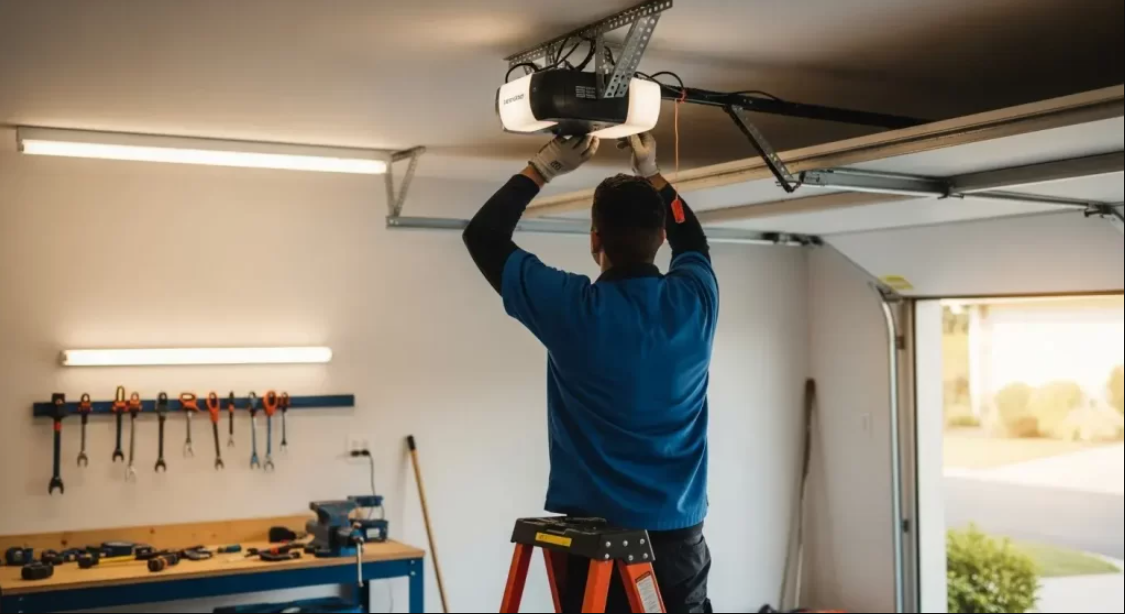
Impact of High Ceilings on Garage Door Opener Replacement
High ceilings transform a standard garage into a spacious, versatile area, but they also introduce unique mechanical challenges during a garage door opener replacement. While a 10-foot or 12-foot ceiling provides excellent overhead storage and room for larger vehicles, it changes the geometry and hardware requirements of your door system.
A standard installation kit usually caters to 7-foot or 8-foot doors, meaning high-ceiling homes often require specialized extensions, reinforced bracing, and specific motor types to ensure long-term reliability. If you ignore these height-related factors, you risk installing a system that vibrates excessively, strains the motor, or fails to lift the door to its full height. At Garage Door Repair Bradenton, we specialize in high-lift and custom-height installations to ensure your system operates smoothly and safely.
Technical Challenges of Oversized Vertical Space
When a ceiling sits several feet above the garage door, the “drop” between the roof and the tracks creates a lever effect. This distance requires professional-grade hardware to maintain the structural integrity of the opener’s rail.
The Need for Long-Rail Extensions and Reinforced Bracing
Most off-the-shelf openers include rails designed for standard 7-foot doors. High ceilings require a technician to install rail extension kits so the trolley can pull the door fully open. Additionally, hanging an opener from a high ceiling requires extended “pre-punched” angle iron bracing. Without proper sway bracing, the motor unit will twist and shake, eventually stripping internal nylon gears and loosening ceiling mounting bolts.
Choosing Between Trolley and Jackshaft Motors
High ceilings offer a choice: a traditional overhead trolley motor or a wall-mounted “Jackshaft” opener. Traditional motors require long hanging brackets that often vibrate. In contrast, a Jackshaft opener mounts directly to the wall beside the torsion shaft. This “Side-Mount” setup eliminates the overhead rail entirely, clearing space for car lifts or storage racks. Assessing height helps determine which configuration offers the quietest performance.
Impact on Maintenance and Safety Sensors
The increased distance between the floor and the motor affects installation, system interaction, and safety component functions.
Extended Wiring and Sensor Alignment
In high-ceiling garages, wiring runs are significantly longer. Technicians must route low-voltage wires for safety sensors and wall buttons to avoid interference with moving parts. Even with “High-Lift” tracks that follow the wall upward, safety sensors must sit exactly 6 inches above the floor. Maintaining this alignment over longer distances requires rigid mounting brackets that won’t vibrate out of place during operation.
Accessibility for Future Adjustments
Replacing an opener in a high-ceiling environment puts the “Learn” button and adjustment screws far out of reach. Modern smart openers solve this by allowing you to set travel limits and force adjustments via a smartphone app. Choosing a Wi-Fi-enabled model for a high-ceiling garage saves you from using a 12-foot ladder every time you need to sync a remote or adjust the door’s speed.
Navigating vertical space requires a specialized approach to ensure your motor lasts. A successful replacement in vaulted or high-ceiling homes depends on using the right rail extensions and high-torque motors. For expert installation tailored to your home’s unique architecture, trust Garage Door Repair Bradenton to handle your project with professional precision.